Immersive Tech Impact
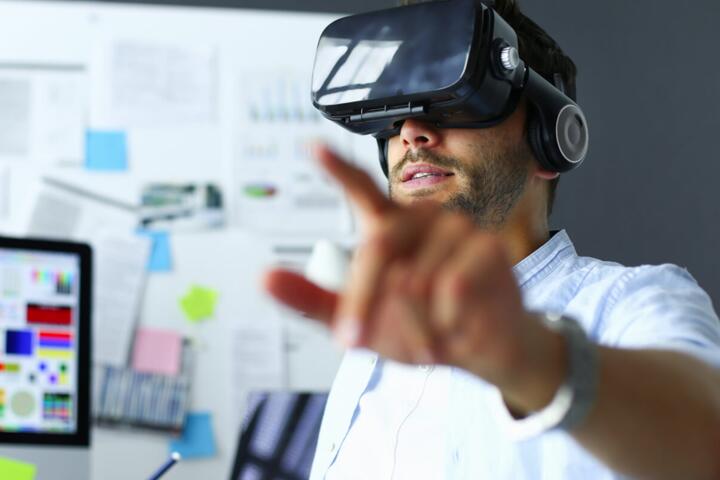
The core of accelerated skill acquisition lies in the transition from cognitive processing to autonomous execution. Traditional methods often rely on 2D observation, which creates a "translation gap" when the learner must apply knowledge to a 3D environment. VR and AR eliminate this gap by placing the user in a high-fidelity spatial context where the motor cortex is engaged immediately.
In surgical training, for instance, residents using platforms like Osso VR or FundamentalVR perform procedures with a level of haptic feedback that simulates bone density and tissue resistance. This isn't just "playing a game"; it is the calibration of the nervous system. According to a study by Yale University, VR-trained surgeons were 29% faster and made 6 times fewer errors than those trained via traditional methods.
The physiological "magic" happens through myelo-genesis—the strengthening of myelin sheaths around neurons through repetitive, perfect practice. Because VR can reset a scenario in milliseconds, a learner can perform 50 repetitions of a complex task in the time it would take to set up two physical attempts. This density of practice is what drives the drastic reduction in time-to-competence.
Learning Bottlenecks
Most organizations fail because they treat immersive media as a "video tutorial in 360 degrees." Passive observation does not build muscle memory. When a learner simply watches a virtual avatar perform a task, the "Mirror Neuron System" is activated, but the "Basal Ganglia"—the part of the brain responsible for motor habits—remains largely dormant.
Another critical pain point is the "Uncanny Valley" of physics. If a simulation has latency higher than 20ms or if the gravity in the virtual space doesn't match real-world expectations, the brain develops "false muscle memory." This can be dangerous in high-stakes environments like electrical grid maintenance or aviation, where a misplaced hand gesture could lead to fatal errors in the real world.
The cost of "re-learning" is often higher than the cost of initial training. Companies using low-fidelity mobile VR for technical skills often find that employees hesitate in the field because the tactile feedback they expected isn't there. This disconnect causes a cognitive load spike, leading to "analysis paralysis" during critical operations.
The Myelin Efficiency Factor
Muscle memory isn't stored in the muscles; it is the optimization of neural pathways. VR allows for "Perfect Practice," where the software prevents the user from completing a movement incorrectly. By blocking the formation of bad habits at the neurological level, the time required to reach the "autonomous stage" of learning is cut by approximately 40-60%.
Cognitive Load Management
Traditional manuals overwhelm the working memory. AR overlays, such as those provided by Microsoft HoloLens 2 using Dynamics 365 Guides, provide "just-in-time" information. This reduces the need for the brain to toggle between a manual and the machine, allowing the subconscious to focus entirely on the physical manipulation of tools.
Haptic Fidelity Evolution
We are moving past simple vibration. Devices like the HaptX Gloves use microfluidic skin displacement to simulate the texture and hardness of objects. When the brain feels the resistance of a virtual bolt, it triggers the exact same motor units required for the real task. This level of sensory input is the bridge between simulation and reality.
State-Dependent Memory
Learning is most effective when the environment of acquisition matches the environment of application. VR creates high-stress environments (like a burning building or a pressurized cockpit) that trigger adrenaline. This "stress inoculation" ensures that the muscle memory remains accessible even when the user is under intense real-world pressure.
Real-Time Biofeedback
Modern headsets like the HP Reverb G2 Omnicept Edition track heart rate and eye movement. If the system detects the learner is overwhelmed, it can automatically simplify the task. This personalized pacing prevents "burnout" and ensures the brain remains in the optimal "Flow State" for maximum synaptic plasticity.
Gamification vs. Simulation
There is a fine line between a game and a trainer. Effective skill acquisition requires "desirable difficulties." Tools like Strivr use data analytics to identify exactly where a learner flinches or hesitates, allowing instructors to iterate on specific micro-movements rather than restarting entire modules.
Post-Training Retention
The "Forgetting Curve" is brutal for traditional workshops. However, 3D spatial memories are stored in the hippocampus similarly to real-life experiences. Users don't remember "reading about" a process; they remember "doing" it. This shifts the memory type from declarative to procedural, which is significantly more durable over time.
Results-Driven Methods
To maximize the speed of skill acquisition, training must be decoupled from physical hardware availability. Using NVIDIA CloudXR, companies can stream high-fidelity simulations to standalone headsets, allowing workers to practice complex turbine assembly in a breakroom or at home.
This works because of "Distributed Practice." Instead of an 8-hour marathon session once a year, employees can engage in 15-minute "micro-simulations" daily. This consistent firing of neural circuits leads to 80% higher retention rates compared to traditional classroom settings. Walmart utilized this approach for their "Black Friday" prep, training over a million associates and seeing a 10% increase in customer satisfaction scores.
In the aerospace sector, Airbus uses AR to help technicians identify thousands of brackets in an aircraft fuselage. By projecting the blueprint directly onto the work surface, the time spent on information retrieval dropped to zero. The "muscle" being trained here is the eye-hand coordination for specific spatial coordinates, which improved overall assembly speed by nearly 40%.
Industrial Use Cases
Case Study 1: Logistics Giant
A global logistics firm faced a 35% turnover rate among new sorters due to the physical intensity and complexity of the sorting floor. They implemented a VR simulation using Varjo headsets to mimic the sorting environment. New hires practiced for 4 hours in VR before touching a real package. Result: Training time decreased from 2 weeks to 2 days, and on-the-job accidents dropped by 60%.
Case Study 2: Automotive Manufacturing
BMW integrated VR into their production planning and assembly line training. By simulating the assembly of a new vehicle model before the physical line was even built, they identified ergonomic issues that would have slowed down workers. Result: The "ramp-up" phase for new models was shortened by 5 months, saving millions in potential downtime and re-tooling costs.
Skill Training Matrix
| Feature | Traditional Training | VR/AR Simulation | Impact on Mastery |
|---|---|---|---|
| Repetition Speed | Slow (Manual Reset) | Instant (Digital Reset) | 3x faster muscle memory formation |
| Error Tolerance | Low (Safety Risks) | Infinite (Safe Failure) | Reduces learner anxiety/hesitation |
| Feedback Loop | Delayed (Instructor Review) | Real-time (Visual/Haptic) | Prevents "bad habit" encoding |
| Knowledge Type | Declarative (Knowing That) | Procedural (Knowing How) | Higher long-term retention |
| Scalability | Linear (1 Trainer : 5 Students) | Exponential (Cloud-based) | Consistent quality across regions |
Common Pitfalls
The most frequent mistake is ignoring "Cybersickness." If a user feels nauseous, the brain associates the skill being learned with physical distress, creating a psychological barrier to performance. Ensure your hardware maintains a steady 90 FPS (frames per second) and utilize "teleportation" movement instead of smooth joystick sliding for beginners.
Over-reliance on visual cues is another trap. If a simulation always highlights the next button to press in bright yellow, the learner's brain relies on the "hint" rather than the "logic." To avoid this, use a "Fading Scaffolding" approach: provide visual aids in the first five attempts, then remove them entirely to force the brain to retrieve the information from long-term memory.
Finally, avoid the "Solo Silo." Skills are rarely used in isolation. Use multi-user VR platforms like MootUp or Engage to simulate team-based stressors. If a technician can fix a valve while a virtual supervisor is "shouting" about a deadline, their muscle memory is far more likely to hold up in the real world.
FAQ
How long does it take to see an ROI on VR training?
Most enterprises report a break-even point within 12 to 18 months, primarily driven by reduced travel costs and shortened "speed to productivity" for new hires.
Can VR replace all physical training?
No. It is a "force multiplier." Use VR for the first 80% of skill acquisition to build the neural pathways, then move to physical equipment for the final 20% to account for real-world environmental variables.
Does AR work better than VR for muscle memory?
AR is superior for "Performance Support" (doing the task while being guided), whereas VR is superior for "Initial Acquisition" (learning the task in a controlled, immersive environment).
What is the ideal session length for VR learning?
To maximize neuroplasticity and minimize fatigue, sessions should last 20-30 minutes, followed by a 10-minute "integration break" away from screens.
Is haptic feedback necessary for all skills?
For fine motor skills (surgery, soldering), yes. For procedural skills (safety protocols, sequence of operations), visual and auditory feedback are often sufficient.
Author’s Insight
In my years of observing industrial tech deployments, I’ve noticed that the most successful projects don't just focus on the "cool factor" of the headset. They focus on the data. I once saw a team reduce cable assembly errors to zero simply because the VR trainer tracked the *path* of the user's hand and corrected the arc of motion. My advice: don't just build a 3D world; build a system that measures movement precision. That is where the true value lies.
Summary
The shift from traditional instruction to immersive simulation represents the most significant leap in pedagogical methodology since the invention of the printing press. By engaging the motor cortex directly and providing a safe space for high-frequency repetition, VR and AR technologies don't just teach—they program the nervous system for excellence. To stay competitive, organizations must stop viewing these tools as experimental and start integrating them as the foundational layer of their human capital development strategy. Focus on high-fidelity haptics, data-driven feedback, and distributed practice to turn your workforce into a cohort of high-speed, high-precision experts.